
Start with the simple settings
Check that the fridge is set near 37°F and the freezer near 0°F, and that nothing is blocking the vents at the back of the fresh-food section. A box of leftovers pushed against the vent can warm a whole shelf.
Listen for the evaporator fan
Open the freezer and press the door switch. You should hear the fan start. Silence usually means a failed fan motor, the cold stays trapped in the freezer while the fridge side warms up.
Look at the coils
Condenser coils caked in dust and pet hair can't shed heat, so the compressor runs longer and cools less. Coils live under or behind the fridge and can be brushed and vacuumed with the unit unplugged.
Check the door seals
Close the door on a dollar bill and pull. If it slides out with no resistance in several spots, warm air is leaking in around the clock.
Frost on the freezer back wall
A sheet of frost on the interior back panel points to a defrost-system failure, heater, thermostat, or timer. That frost chokes airflow until nothing cools properly.
When to call
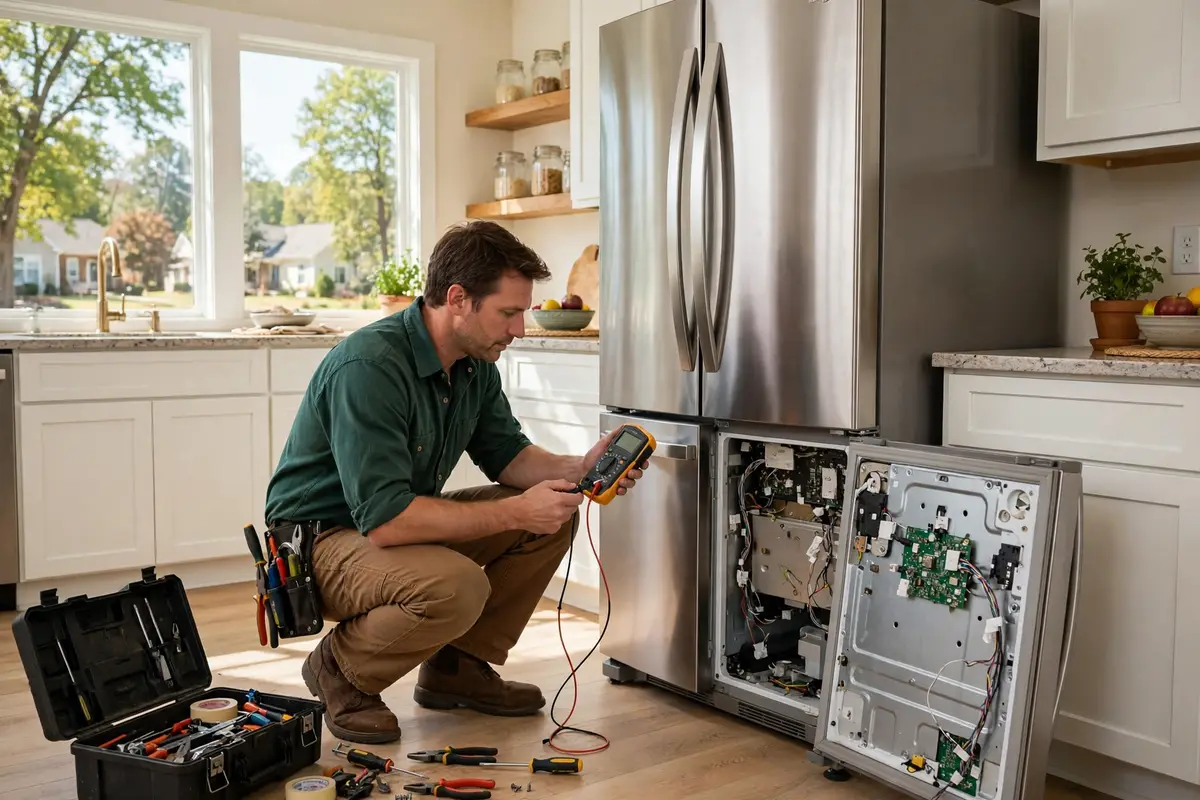
If the fan, coils, and seals check out and temperatures still climb, the cause is likely a start relay, control, or sealed-system issue. Those need meters and parts, that's our refrigerator repair visit.